Fool's Gold: Why Your Losing Streak Isn't the Universe Telling You a Win Is Coming
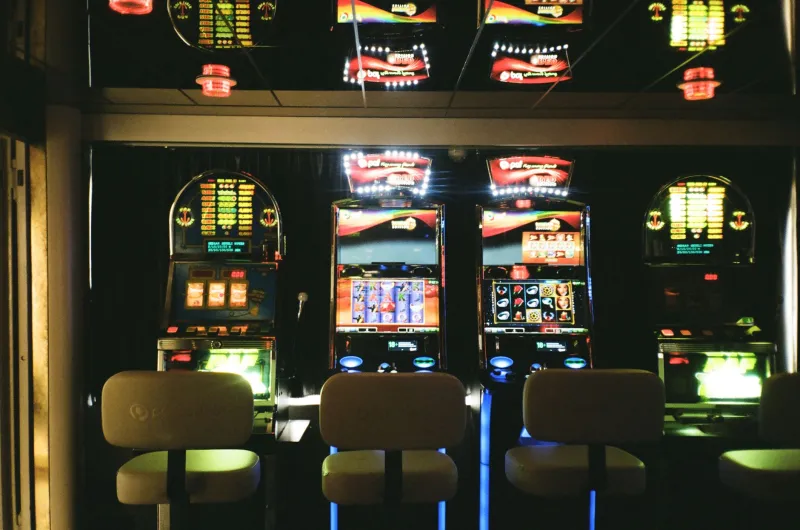
There's a moment every Australian pokies player knows intimately. You've spun fifteen times and landed nothing meaningful. Your balance is bleeding. And then, quietly, a voice in the back of your head whispers: it has to turn around soon.
It feels logical. It feels almost mathematical. You've been unlucky for so long that surely the odds are stacking in your favour. The machine owes you one. The cards are due to fall your way. The universe is about to balance the books.
It won't. And understanding exactly why it won't could be the most valuable thing you ever learn as a player.
The Gambler's Fallacy Has a Very Long Australian History
This particular trap has a proper name: the gambler's fallacy. It's the mistaken belief that past random events influence future ones — that after a long run of red, black is somehow more likely on the roulette wheel. After ten tails, heads must be coming. After a cold streak on the pokies, a bonus round is imminent.
The fallacy isn't unique to Aussie players, but there's something about Australian gambling culture — the pub pokie, the TAB, the footy bet — that makes this thinking feel especially natural here. We're a nation that loves a comeback story. The underdog who finally gets their due. Matilda's fighting back from two goals down. It's woven into the cultural fabric.
But a slot machine doesn't watch the footy. It doesn't care about narrative arc.
How Random Actually Works
Every spin on a modern online pokie is governed by a Random Number Generator (RNG). This isn't a loose term — it means each spin is a completely independent event. The machine has no memory of what happened before. It doesn't track your session, register your frustration, or build toward a payout because you've been patient.
Think of it like flipping a coin. If you flip heads ten times in a row, the probability of heads on the eleventh flip is still exactly 50%. The coin doesn't know about the previous ten. It can't. The same principle applies to every spin, every hand, every roulette wheel rotation.
Your losing streak isn't accumulating pressure that must eventually release as a win. It's just a losing streak.
The 'Hot Hand' Myth Works the Other Way Too
Interestingly, the gambler's fallacy has a mirror image called the hot hand fallacy — the belief that a winning streak means you're on a roll and wins will keep coming. Sports fans know this one well. A basketballer hits five shots in a row and suddenly everyone's convinced he's 'in the zone.'
Research from psychologists Daniel Kahneman and Amos Tversky, who spent decades studying how humans make terrible decisions under uncertainty, showed that people consistently misread random sequences. We see patterns where there are none. We assign meaning to streaks that are statistically unremarkable.
For Australian gamblers, this creates a double bind. Winning streaks feel like momentum. Losing streaks feel like mounting debt that the universe must repay. Both interpretations are wrong. Both cost money.
What's Actually Happening in Your Brain
When you're deep in a losing run and convince yourself a win is overdue, your brain isn't malfunctioning — it's doing exactly what it evolved to do. Human brains are pattern-recognition machines. For most of human history, spotting patterns in chaos was a survival skill. If berries made you sick three times in a row, avoiding them the fourth time was sensible.
Gambling exploits this wiring ruthlessly. The near-miss — two matching symbols and then a blank — is particularly cruel. Research has shown that near-misses activate the same reward pathways as actual wins. Your brain registers it as almost, and almost feels like evidence that the real thing is close.
It isn't. A near-miss on a pokie is no more predictive of a future win than a complete blank. The RNG doesn't do 'almost.'
The Real Cost of Believing the Comeback Is Coming
Let's be direct about what this fallacy actually does to Australian players' bankrolls.
When you believe a win is overdue, you're more likely to:
- Extend your session beyond your budget — because leaving now means missing the payout that's surely imminent
- Increase your bet size — trying to maximise the big win you've convinced yourself is coming
- Ignore your session limits — because the rules you set for yourself feel less important than the win you're owed
- Chase losses aggressively — the losing streak becomes evidence of an impending correction rather than a signal to stop
The Australian Institute of Family Studies has noted that problem gambling in Australia often involves exactly this kind of loss-chasing behaviour. The gambler's fallacy isn't just an intellectual error. It's a mechanism that turns manageable play into financial harm.
Practical Ways to Break the Pattern
Knowing about cognitive bias doesn't automatically protect you from it. The fallacy feels convincing in the moment, even when you understand it intellectually. So here are strategies that actually work in practice:
Name it out loud. When you catch yourself thinking 'it has to turn around,' say the words: that's the gambler's fallacy. Naming the bias creates distance from it. It shifts you from feeling to thinking.
Set limits before you start. Decide on your session budget and your loss limit before you log in, not mid-session when the fallacy has already taken hold. A decision made in a calm state is far more reliable than one made while you're chasing.
Treat every spin as its own event. This is harder than it sounds, but try reframing each spin as a fresh, isolated moment rather than part of a sequence. Because that's exactly what it is.
Track your sessions honestly. Keep a simple log of your sessions — how long, how much deposited, result. Seeing the data in black and white makes it harder for narrative thinking to take over.
Walk away when the voice gets loud. If you find yourself strongly convinced that a win is imminent, that's actually a warning signal, not a green light. The louder the 'it's coming' feeling, the more likely you are to be in the grip of the fallacy.
The Machine Doesn't Owe You Anything
Australians love a good underdog comeback. We celebrate resilience. We back ourselves when the odds look grim. These are genuinely great qualities — in life, in sport, in most things.
But the pokies aren't a contest of will. They're not watching your patience and preparing to reward it. The RNG doesn't know you've been waiting. It doesn't know anything.
The most strategically sound players aren't the ones who grind through losing streaks convinced a reversal is coming. They're the ones who understand that each spin is a fresh roll of the dice, make peace with variance, and stick to their limits regardless of how the session is going.
The comeback king trap is compelling precisely because it flatters your instincts. It tells you that you're reading the game, that you understand something others don't, that your patience will be rewarded. But the house edge doesn't negotiate with narratives.
Play smart. Set your limits. And when that voice whispers that the win is overdue — recognise it for what it is.